
The Authentic Learning Lab Framework
Authentic learning is more than what students do. It is who they become, who they become connected to, what they experience, and what changes as a result.
The Four Dimensions of Authentic Learning™ help educators and institutions examine learning as a human and systemic experience—not simply a collection of lessons, projects, or outcomes.
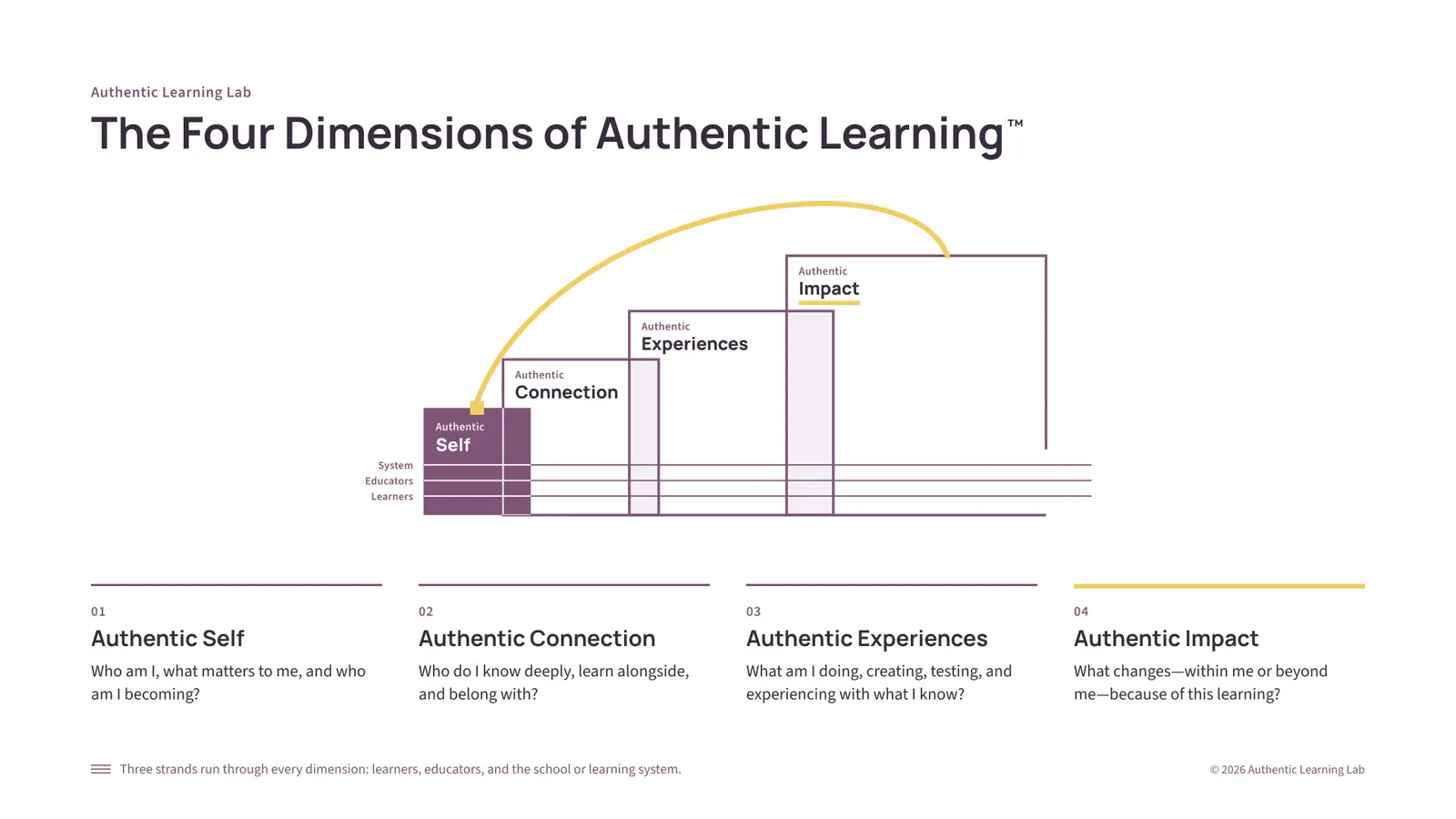
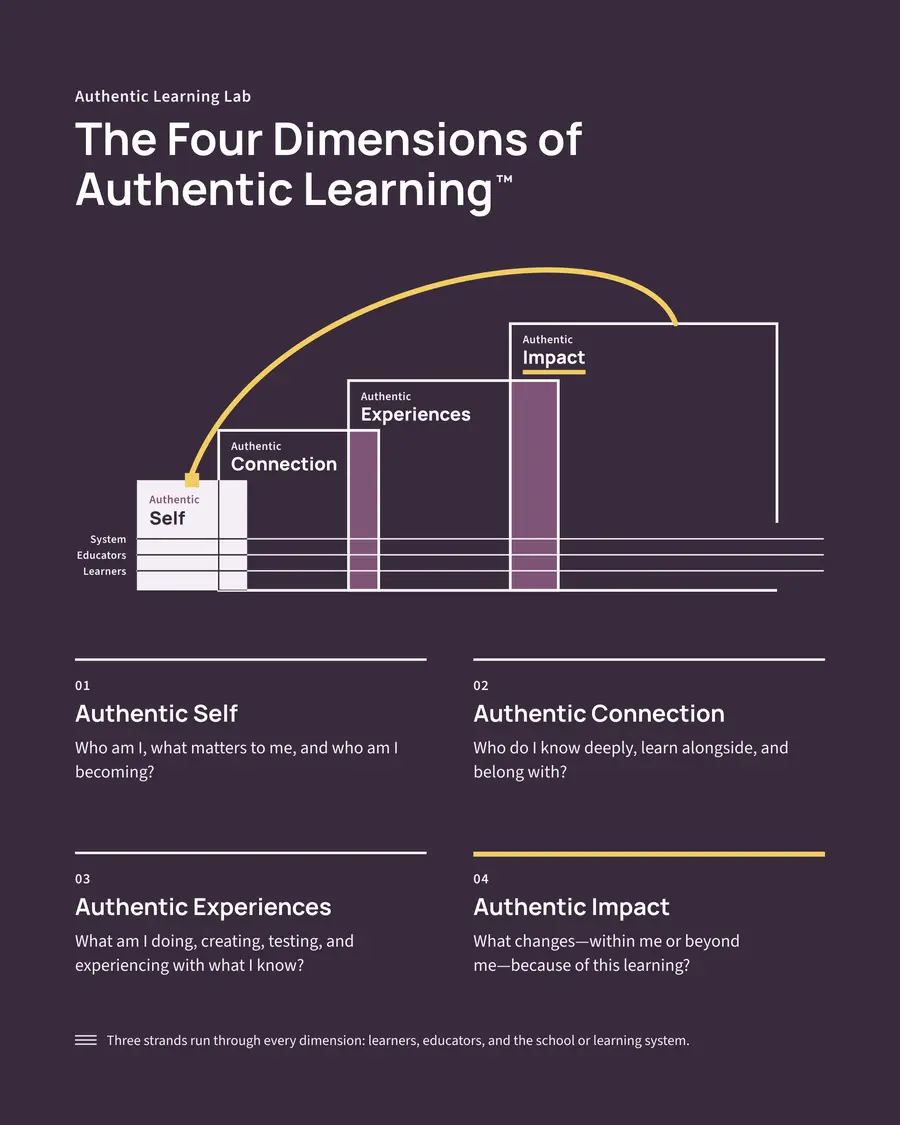
Four frames grow and overlap from Authentic Self to Authentic Impact. Three strands—learners, educators, and the institution—run through every frame, and a path returns from Impact to Self.
Why this framework now
Information, answers, and increasingly sophisticated products are easier to generate than at any previous moment. Education must therefore become more intentional about what cannot be reduced to information production: identity, relationships, lived experience, judgment, agency, and contribution.
The Four Dimensions create a practical language for doing that work. They help a community ask not only what learners know, but what their learning is enabling them to become and contribute.
Dimension one
Authentic Self
Who am I—and who am I becoming?
Authentic Self concerns identity, agency, curiosity, strengths, values, vulnerabilities, purpose, and the growing belief that one can act upon the world. It does not mean every learner works alone or follows only personal preference. It means learning connects with the person doing it.
For educators
Professional identity, judgment, voice, and the freedom to grow rather than merely comply.
For institutions
Clarity about mission, culture, values, and the people the school is trying to help learners become.
Questions to consider
- Where do learners make meaningful decisions?
- When do educators exercise professional judgment?
- Does the lived experience of the school reflect its stated values?
Dimension two
Authentic Connection
Who am I learning from, with, and for?

Authentic Connection concerns belonging and the relationships that enlarge learning. It includes peers and teachers, but it reaches further—to families, mentors, experts, elders, employers, artists, scientists, organizations, cultures, communities, and places.
For educators
Trust, collaboration, professional community, and access to people who expand practice.
For institutions
The quality of internal relationships and whether community partnerships are reciprocal, purposeful, and connected to learning.
Questions to consider
- Who knows each learner deeply?
- Who beyond the classroom contributes expertise or perspective?
- Do partnerships shape learning, or merely decorate it?
Dimension three
Authentic Experiences
What am I actually doing with what I know?

Authentic Experiences move learning into action. Learners investigate questions, encounter places, apply disciplinary knowledge, create for real audiences, receive feedback, make decisions, revise assumptions, and work within genuine constraints.
For educators
Meaningful professional learning, experimentation, design, observation, feedback, and the opportunity to build something consequential.
For institutions
Whether schedules, curriculum, assessment, resources, and permissions make such experiences possible.
Questions to consider
- Where does reality enter the learning process?
- What feedback cannot be manufactured by a rubric alone?
- What are educators being asked to experience, test, and create?
Dimension four
Authentic Impact
What changes because of this learning?
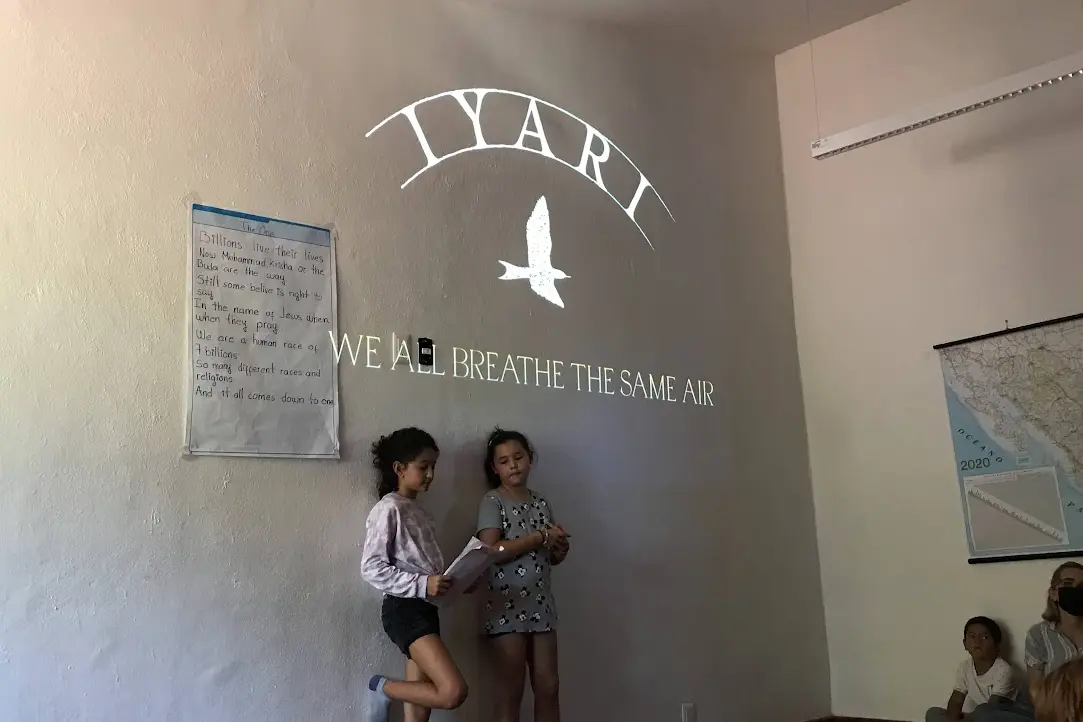
Authentic Impact does not require every learner to solve a global problem. Impact may be internal: stronger identity, confidence, capability, judgment, empathy, or purpose. It may be external: informing an audience, serving a community, improving a process, contributing research, creating beauty, or changing a decision.
For educators
Seeing how their professional learning improves practice and how their work matters.
For institutions
The evidence, stories, artifacts, relationships, and outcomes that show whether the mission is being lived.
Questions to consider
- What mark does the experience leave on the learner?
- Who benefits from the work?
- How does the institution learn from its own impact?
Three levels, one experience
Students cannot experience authentic learning inside an inauthentic adult system.
Schools cannot continually ask educators to develop authentic learners while giving educators increasingly inauthentic professional lives. The framework therefore applies to the learner, the educator, and the institution.
Learnersthe learner experience
Educatorsthe educator experience
Institutionthe structures, culture, and systems that shape both
When these levels reinforce one another, the work becomes more coherent. When they conflict, even excellent initiatives struggle to last.
Where to begin
Where is authentic learning strong—and where is it breaking down?
The Authentic Learning Diagnostic examines the Four Dimensions across learners, educators, and institutional systems. The goal is not to generate a generic score.
The framework is shared. Its expression should be unmistakably yours.
Authentic Learning Lab does not install the same program in every institution. We use the Four Dimensions to help communities see their current reality, make principled choices, and design learning that fits their people, place, mission, and aspirations.